High Intensity Daily Personal Activities
All 9 NDIS HIDPA skill areas delivered by an AHPRA Registered Nurse in Perth — tracheostomy, ventilation, seizure, PEG, bowel care & more.
High Intensity Daily Personal Activities
We deliver training, competency assessment, care planning, and direct clinical support across all NDIS High Intensity Daily Personal Activities (HIDPA) as defined by the NDIS Quality and Safeguards Commission Skills Descriptors.
What Are High Intensity Supports?
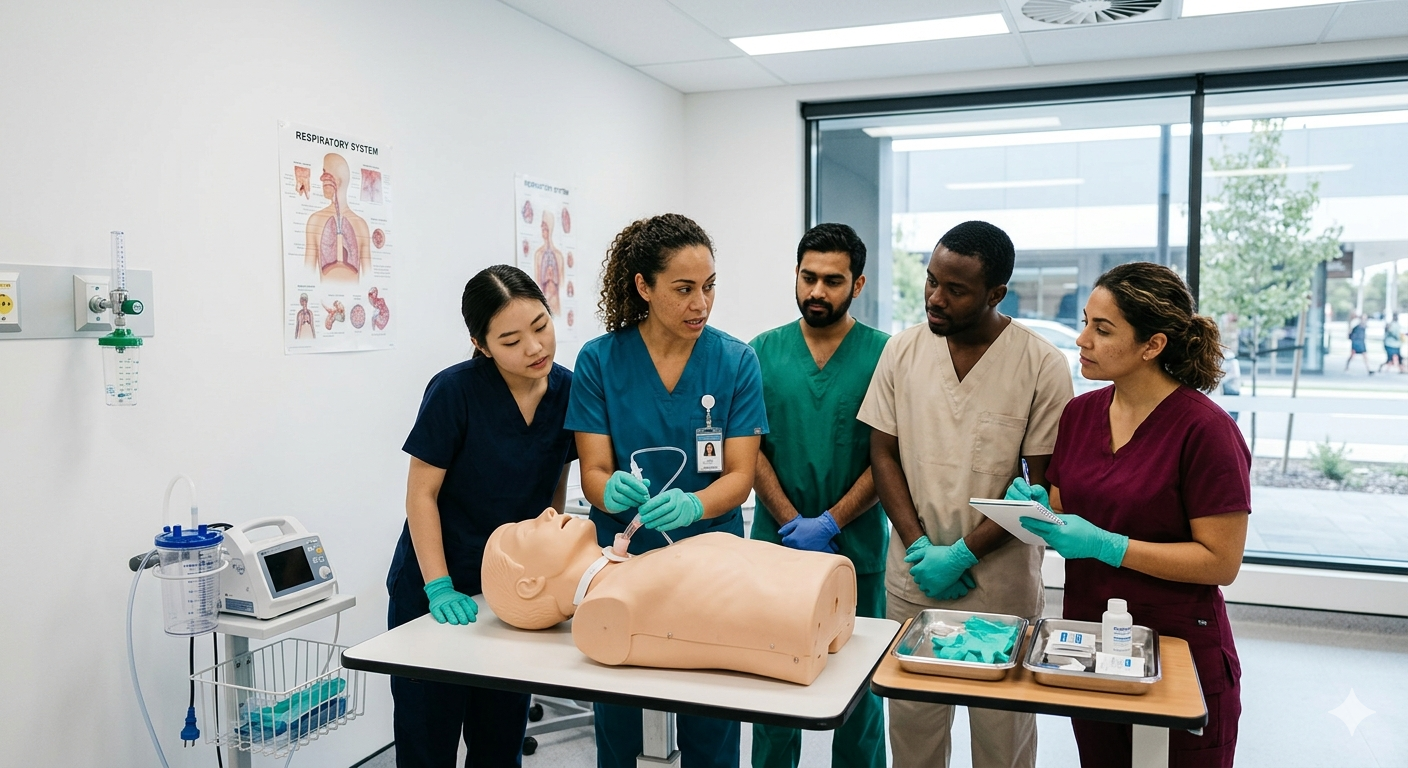
High intensity support skills descriptors are supplementary guidance for NDIS providers and workers supporting participants who rely on High Intensity Daily Personal Activities. These supports carry some of the highest clinical risks for participants — requiring workers with specialist knowledge and verified competency, assessed by a qualified health professional. Our registered nursing team delivers training, direct care, and ongoing competency assessment across all 9 HIDPA skill areas — in home, in Supported Independent Living (SIL), and in community environments.
Complex Bowel Care
Supporting participants with complex bowel care needs including manual evacuation, digital stimulation, suppositories, enemas, and ostomy/stoma care. Workers must understand bowel anatomy, follow participant-specific support plans, and recognise complications requiring medical review.
- Administer suppositories and Microlax enemas safely
- Perform digital rectal stimulation per support plan
- Ostomy and stoma bag changes with infection control
- Recognise signs of constipation, bowel obstruction and autonomic dysreflexia
- Document and report bowel output accurately
- Follow participant-specific bowel management plans
Enteral Feeding Support (PEG & PEJ)
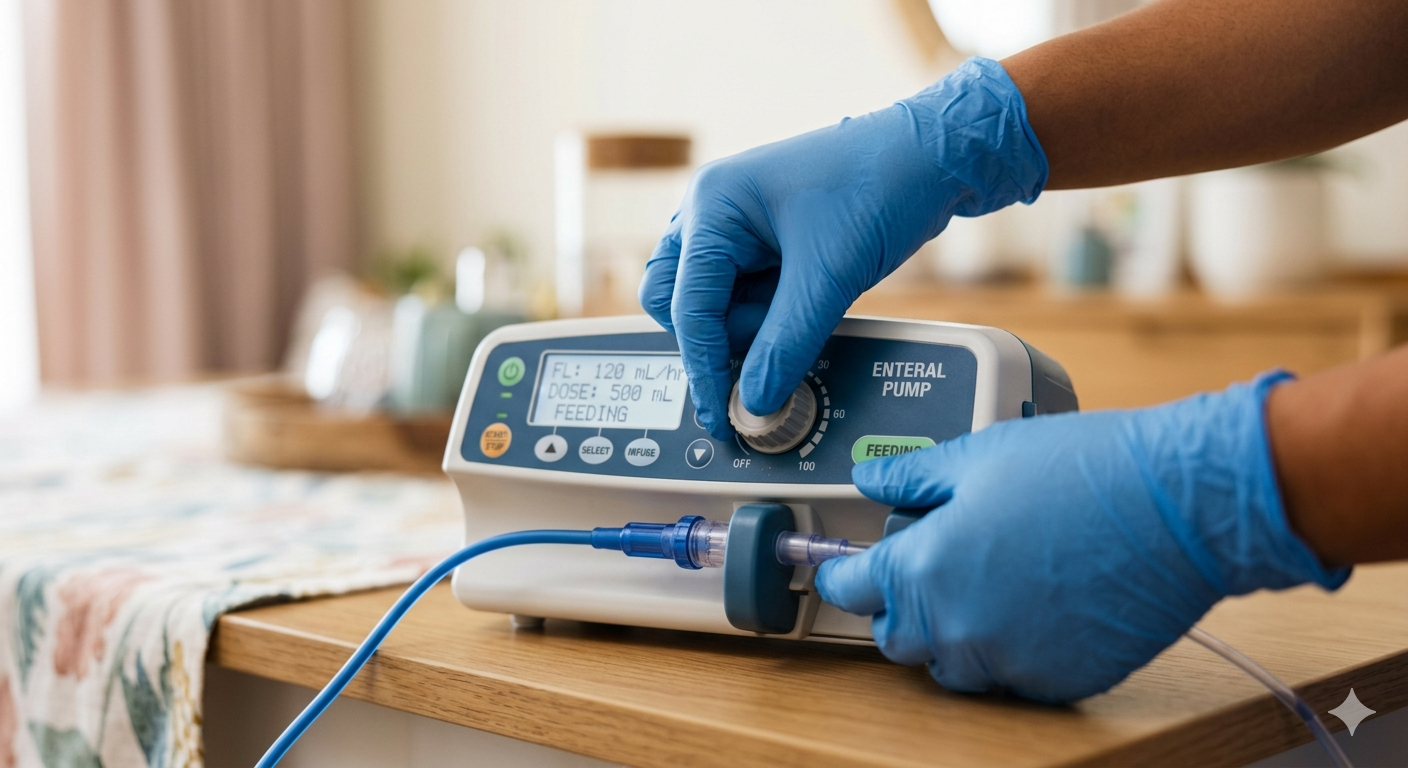
Supporting participants who receive nutrition through a PEG (Percutaneous Endoscopic Gastrostomy) or PEJ (Percutaneous Endoscopic Jejunostomy) tube. Includes tube and stoma care, feeding regimes, administering feeds and medications, and responding to complications.
- Prepare and administer enteral feeds via syringe/bolus method
- Administer medication through PEG/PEJ tube
- Gastrostomy/jejunostomy stoma site care
- Troubleshoot tube displacement, blockage, and leakage
- Recognise signs of aspiration, infection, and granulation tissue
- Follow enteral feeding regimen and hydration plan
Dysphagia & Mealtime Support
Supporting participants with swallowing difficulties (dysphagia) to eat and drink safely. Workers must understand texture-modified diets and fluid consistency levels (IDDSI framework), follow mealtime management plans, and respond appropriately to choking and aspiration emergencies.
- Apply IDDSI food and fluid texture levels correctly
- Follow participant mealtime management plans
- Recognise aspiration signs and respond to choking
- Correct positioning for safe swallowing
- Thicken fluids to prescribed consistency
- Administer medications safely for participants with swallowing difficulties
Ventilator & Respiratory Support
Supporting participants who require mechanical ventilation (invasive or non-invasive). Workers must understand ventilator settings, circuit management, alarm responses, and emergency procedures. Requires specialist competency assessment by a Registered Nurse or respiratory clinician.
- Monitor ventilator settings and alarm responses
- Circuit and humidification system management
- Suction via endotracheal or tracheostomy tube
- Respond to ventilator alarms and disconnection emergencies
- Non-invasive ventilation (CPAP/BiPAP) mask fitting and care
- Recognise signs of respiratory deterioration
Tracheostomy Support & Care
Supporting participants with a tracheostomy tube in situ. Includes stoma care, inner cannula changes, suctioning, speaking valve management, and emergency tube displacement procedures. All workers must be competency-assessed before providing unsupervised care.
- Tracheostomy stoma site care and dressing changes
- Safe suctioning technique (open and closed)
- Inner cannula removal, cleaning, and reinsertion
- Respond to tube displacement and decannulation emergencies
- Passy Muir speaking valve application and removal
- Humidification and cuff management
Urinary Catheter Support
Supporting participants using indwelling urinary catheters (IDC), suprapubic catheters (SPC), or external drainage devices. Catheter insertion and removal is performed exclusively by our Registered Nurses. Support workers receive training in ongoing management and monitoring.
- Urinary drainage bag changes and emptying
- Catheter site hygiene and infection prevention
- Recognise signs of urinary tract infection and blockage
- Leg bag and overnight bag management
- Suprapubic catheter stoma site care
- External catheter (condom catheter) application
Subcutaneous Injections
Supporting participants who require subcutaneous injections as part of their daily care — including insulin for diabetes management, anticoagulants, and other prescribed medications. Workers must be competency-assessed and operate within a participant-specific support plan.
- Safe subcutaneous injection technique
- Insulin pen and syringe administration
- Rotation of injection sites to prevent lipodystrophy
- Blood glucose monitoring and hypoglycaemia management
- Medication storage, waste disposal, and sharps safety
- Recognise and respond to adverse reactions
Complex Wound Care & Pressure Injury
Supporting participants with complex wounds beyond basic first aid — including pressure injuries, chronic wounds, post-surgical wounds, and wounds requiring aseptic dressing technique. All care follows wound management plans developed by our registered clinical team.
- Aseptic non-touch technique (ANTT) for dressing changes
- Wound assessment, classification, and documentation
- Pressure injury prevention and staging
- Recognise signs of wound infection and deterioration
- Application of prescribed wound dressings and topical agents
- Negative pressure wound therapy (VAC) monitoring
Epilepsy & Seizure Support
Supporting participants living with epilepsy — understanding seizure types, triggers, safe practices during a seizure, and emergency medication administration including intranasal and buccal midazolam per an emergency medication management plan.
- Identify seizure triggers and risk minimisation strategies
- Manage partial and generalised seizures safely
- Administer intranasal midazolam (Epistatus/Buccolam)
- Administer buccal midazolam per emergency plan
- Recovery position for unconscious participants
- Post-seizure care and documentation
Diabetes Management Support
Supporting participants living with Type 1 or Type 2 diabetes — including blood glucose monitoring, insulin administration, recognising and managing hypoglycaemia and hyperglycaemia, and supporting healthy lifestyle and dietary management within a personalised care plan.
- Blood glucose testing — glucometer technique
- Insulin administration via pen and syringe
- Recognise and manage hypoglycaemia and hyperglycaemia
- Diabetic foot care and skin assessment
- Support healthy nutrition and lifestyle choices
- Continuous glucose monitoring (CGM) device support
All HIDPA training is consistent with the NDIS Practice Standards: High Intensity Support Skills Descriptors (revised February 2025) published by the NDIS Quality and Safeguards Commission.
Book HIDPA Training →